
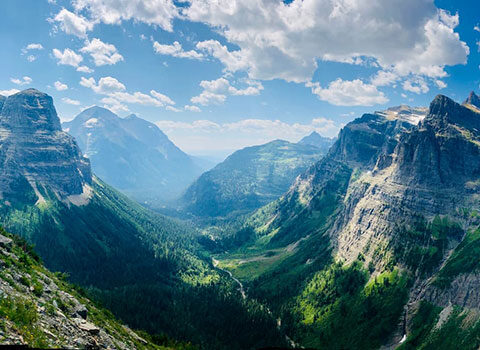
Dreaming of backpacking in Glacier National Park? There’s nothing quite like leaving the crowds behind, hiking into the mountains, and spending a few nights beneath the stars in one of America’s most spectacular wilderness areas.
But planning a Glacier backpacking trip can raise plenty of questions. How do you get a permit? When should you go? What gear do you need? And what about the bears?
We’ve been guiding backpacking trips in Glacier National Park since 1983, and we’ve helped thousands of guests experience the backcountry. Here are answers to five of the questions we hear most often.
#1: How Do I Get a Backpacking Permit in Glacier National Park?

All overnight backpacking trips in Glacier National Park require a wilderness camping permit. With limited campsites and high demand, getting a permit can be one of the trickiest parts of planning your adventure.
Glacier National Park uses Recreation.gov for advance wilderness permit reservations. A portion of permits is also available through the park’s walk-up permitting process. Check the National Park Service website for current information and reservation dates.
Want to skip the permit planning? That’s where we come in!
Glacier Guides & Montana Raft has been an authorized Glacier National Park concessioner since 1983. We offer guided backpacking trips ranging from three to six days, exploring some of Glacier’s most spectacular backcountry.
When you book with us, we handle the wilderness permits, trip planning, delicious backcountry meals, group camping equipment, and transportation to and from the trailhead. Our experienced local guides take care of the details so you can enjoy the adventure.
Looking for something more personalized? We also offer private and custom backpacking trips for families, friends, and groups. While specific itineraries can’t be guaranteed, we’re happy to explore your options.
PRO TIP: Book early! Glacier’s short summer season and limited backcountry campsites mean popular trips can fill well in advance.
Explore our guided Glacier National Park backpacking trips.

#2: When Is the Best Time to Go Backpacking in Glacier National Park?
The best time to go backpacking? When you can make the time! Life gets busy, and there’s always a reason to put off an adventure. Our advice? Make it happen!
Glacier’s backpacking season generally runs from late May to the beginning of October, with each part of the season offering something different.
Mid-July Through August: The Most Popular Time
By mid-July, many of Glacier’s backcountry trails and campsites are typically snow-free and open. The weather is generally warmer, the days are long, and more high-elevation routes become accessible.
It’s also the busiest time of year, making wilderness permits harder to secure, especially for popular routes.
But that’s one of the great things about backpacking: once you’re a few miles down the trail, the crowds quickly thin out. Glacier’s permit system limits the number of campers at each backcountry campsite, helping preserve that sense of wilderness and solitude.

Late Spring and Early Fall: The Quieter Seasons
Don’t overlook Glacier’s shoulder seasons! Late May, June, and September can offer incredible backpacking opportunities, with fewer people on the trails, beautiful scenery, and opportunities to see wildlife.
Snow may limit higher-elevation routes in spring, while fall brings cooler temperatures and shorter days. But exploring a lower-elevation valley can be every bit as rewarding as crossing the Continental Divide.
After more than 40 years of guiding in Glacier’s backcountry, we’ve learned that the magic of backpacking isn’t necessarily about reaching a particular destination. It’s about getting out there, slowing down, and experiencing Glacier’s wilderness.
PRO TIP: Be flexible with your dates and itinerary. Some of the best backpacking experiences happen on trails you might not have originally considered.

#3: What Do I Need to Go Backpacking in Glacier National Park?
If you’re backpacking with Glacier Guides & Montana Raft, you won’t need to bring much! We take care of the food, cooking equipment, permits, and trip logistics. You’ll just need your personal clothing and gear, along with a backpack, tent, sleeping bag, and sleeping pad.
Don’t have all the equipment? No problem! You can rent backpacking gear from us.
Before heading out, your guide will go over your gear, help make sure you’re prepared, and distribute food and group equipment. A well-packed backpack typically weighs 25 to 35 pounds, although this varies by trip and individual.
Remember: Ounces make pounds! Packing light makes for a more enjoyable adventure. Check out our backpacking packing list to help you prepare. One of the best things about backpacking is discovering how little you really need. A few days with just the essentials—food, water, shelter, and spectacular scenery—can be a refreshing reminder of life’s simple pleasures.
PRO TIP: Don’t bring everything you think you might need. Bring what you actually need! Your back and your feet will thank you.
#4: What About Bathrooms in Glacier’s Backcountry?
Yes, everybody has to go, even in the wilderness! And it’s easier than you might think.
Glacier’s backcountry campsites generally have designated pit toilets, some enclosed and others offering spectacular mountain views. The toilet at Fifty Mountain is particularly memorable!
While hiking, your guide will explain proper Leave No Trace bathroom practices, including where and how to go when nature calls. We’ll have toilet paper and hand sanitizer available, and your guide can answer questions about feminine hygiene in the backcountry.
PRO TIP: Don’t worry about asking bathroom questions! We’ve heard them all, and being comfortable in the backcountry is part of having a great trip.

In the backcountry, pit toilets are available in each campsite. Some of them offer absolutely amazing views, like the one from Boulder Pass. Others are enclosed. Each one is part of your adventure.
#5: What About the Bears?

First: take a deep breath and try not to worry about the bears. Glacier National Park is home to both grizzly bears and black bears. Seeing one in the wild can be an unforgettable experience, and sharing the landscape with these magnificent animals is part of what makes Glacier so special.
Bear encounters are something we take seriously, but they shouldn’t keep you from enjoying a backpacking adventure.
Our guides are trained in bear safety and National Park Service backcountry practices. We carry bear spray, follow proper food storage procedures, and teach guests how to travel responsibly in bear country.
Before your trip, we’ll review bear safety, and along the trail, your guide will share tips on recognizing bear activity and avoiding unwanted encounters.
Bear attacks are rare, and traveling in a group while following proper precautions helps reduce the risk.
PRO TIP: Make noise while hiking, stay with your group, and always follow your guide’s instructions. Remember, we’re visitors in the bears’ home!
Bonus FAQ – What are the best socks and footwear for backpacking in Glacier National Park?
Answer: socks and footwear you’ve already tried out, and that you know don’t give you blisters! A backpacking trip isn’t the time to try out new footwear or socks. There a million kinds of feet and almost that many brands of socks and footwear out there. We recommend getting fitted at your favorite, locally owned outdoor store, purchasing footwear and socks from that small business owner, and wearing them faithfully for many, many hours before you take them backpacking for the first time. Synthetic socks are definitely preferred. Some people wear liners, some people don’t. Footwear could be anything from sturdy trail runners to all leather hiking boots. You do you! Happy feet, happy hiker.
Helpful Map on Glacier NPS Website
More Questions on Backpacking in Glacier National Park?
That’s what we’re here for. Give us a call at 406-387-5555 or email info@glacierguides.com to learn more about backpacking trips we’re taking this summer. See you on the trails!